October 22, 2026
Bladder Leaks Throughout Exercise: Reasons & Alleviation
By @brookspkkc693
❦
Bladder Training The high-impact workout you once enjoyed no more appears to be a great fit, now that stress urinary incontinence has sneaked right into your life. Maybe you leak urine if you turn your tennis noise with force or do any type of high-spirited jumping in an aerobics course. The pain, problem, and shame could make you intend to give up on your regimen. Your doctor or registered nurse may ask you to maintain a diary for 2 to 3 days to track when you empty your bladder or leakage urine. The diary may help your medical professional or nurse see patterns in the incontinence that offer hints regarding the feasible cause and treatments that might benefit you. If you have urinary incontinence, you can make a visit with your medical care company, your OB/GYN, or a registered nurse specialist. Your doctor or registered nurse will certainly work with you to treat your urinary incontinence or refer you to a specialist if you require different treatment. Lots of women with urinary incontinence have both anxiety and prompt incontinence. Any kind of weakness or damage to the urethra in a lady is more probable to create urinary system incontinence. This is due to the fact that there is less muscle maintaining the urine in until you prepare to urinate. This assists your health care carrier establish the right location to begin the training and to monitor your progression throughout your program. Lots of people take bladder and bowel control for given-- up until something fails.
- Your bladder obtains assistance from muscles called the pelvic floor.
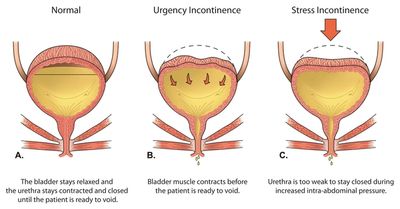
- When these muscular tissues can not support the bladder and urethra well, stress during exercise presses urine out.
- Urinary incontinence can occur when the bladder muscles unexpectedly tighten and the sphincter muscle mass are not strong enough to pinch the urethra shut.
- One problem frequently run into in training PFME is muscle isolation.
- A lasting cough from smoking or lung conditions repeatedly boosts pressure in the abdomen.
Urinary System Incontinence
What workouts should you avoid with urinary incontinence?
High-impact exercise and sit-ups put pressure on your pelvic flooring muscle mass and can increase leaks. To reinforce your pelvic flooring to relieve symptoms, change high-impact exercise, such as running and aerobics, with strengthening workout, such as pilates.
Stay Physically Active
A research study by a pelvic flooring expert, Michelle Kenway, has actually shown that pelvic floor exercises have assisted clients boost urinary incontinence concerns by 70%. Not only are exercises for the bladder muscles reliable, but they're additionally easy to do at home. If doing these workouts creates discomfort, quit doing them and talk with your doctor. PFME is an exercise that involves the understanding of pelvic flooring muscle mass activation and the quest of a repeated PFME program over time. Since performance depends upon the clients' adherence during the intervention and later on in the maintenance phase, a far better understanding of adherence mechanisms and exactly how they can be promoted is of major relevance. This present evaluation paper offers a summary of professional application of PFME as a behavioral therapy for urinary system incontinence. On top of that, this post presents current proof on PFME in the medical and research study setups. If you are uncomfortable or unclear about doing Kegel workouts on your own, a doctor or registered nurse can likewise show you exactly how to incontinence-direct do Kegels. Behavioral therapy under caregiver support represents proper treatment method for urinary incontinence in these clients (Na and Cho, 2020). Normal supervision by a specialist is very important for improvements in urinary incontinence and the client's complete satisfaction. Furthermore, regular examination and feedback by the physio therapist helps to construct a client's sense of efficacy regarding PFME and to preserve adherence to the therapy (Alewijnse et al., 2001). With loss of tone from pelvic floor muscle mass or nerve injury, there is leisure in the urogenital respite, which decreases the horizontal positioning of the levator plate. Lugging excess weight is a well-known danger element for tension urinary incontinence, where pee leakages throughout tasks like coughing, chuckling, or exercising. The extra weight places added pressure on your bladder and pelvic muscular tissues, increasing the danger of urinary system incontinence. 
❧